
Menu
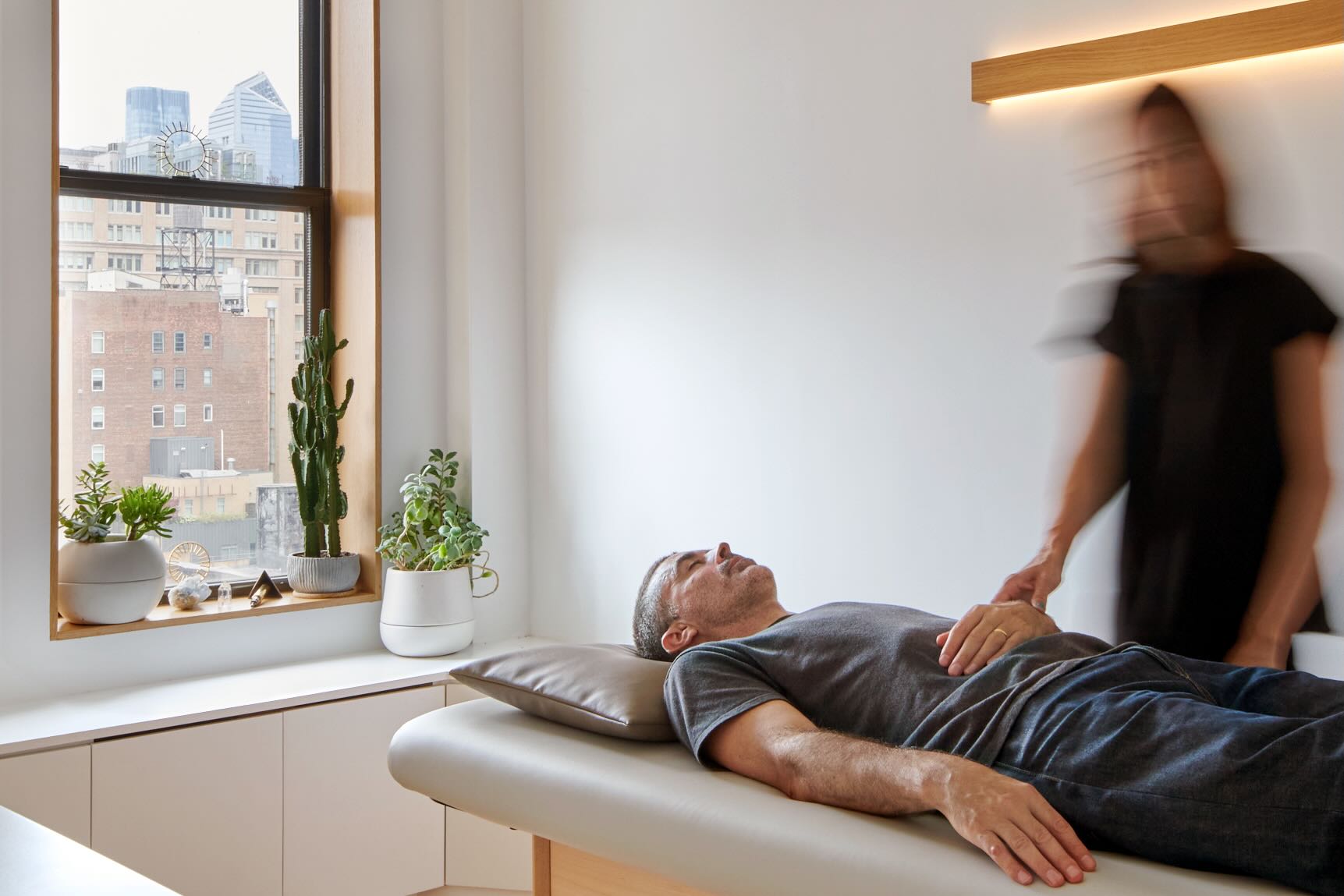
Sleep trouble touches nearly every part of daily life — your mood, your focus, your ability to handle stress. Whether you're lying awake for hours, waking at 3am, or dragging through the day on too little sleep, it's exhausting in a way that's hard to explain. Acupuncture may help by calming the nervous system pathways that keep the body in a state of alert when it should be winding down. At our Chelsea clinic in New York City, insomnia is one of the mental and emotional wellbeing conditions we treat — and one that tends to respond well to a consistent course of care.
Research suggests acupuncture may support the body's melatonin production — the hormone that regulates your internal clock and signals when it's time to sleep. A 2004 study published in the Journal of Neuropsychiatry and Clinical Neurosciences found a significant increase in overnight melatonin secretion after five weeks of acupuncture in adults with anxiety-related insomnia. Some people notice they begin to feel sleepy at more predictable times as treatment progresses.
When the nervous system stays in a heightened alert state, sleep becomes difficult to initiate and maintain. Acupuncture activates the parasympathetic nervous system — the body's rest mode — which can help lower heart rate, ease mental chatter, and make it easier to transition into sleep. Some patients report feeling noticeably calmer during and immediately after treatment, which carries into their evenings at home.
A 2025 systematic review and meta-analysis published in Frontiers in Neurology found that acupuncture improved both sleep quality scores and sleep efficiency — including reduced time lying awake after initially falling asleep — compared to sham acupuncture. The research suggests that for people with chronic insomnia, acupuncture may help shift sleep patterns toward deeper, more restorative stages rather than simply adding hours.
You've cut caffeine, bought the white noise machine, tried melatonin gummies, and still find yourself wide awake at 2 AM. If behavioral changes and over-the-counter solutions haven't done enough, acupuncture may offer a different entry point. It works on nervous system regulation rather than sedation, which makes it a useful complement to whatever else you're doing.
For many people, insomnia and stress feed each other — you can't sleep because you're anxious, and you're anxious because you can't sleep. Acupuncture doesn't treat these as separate problems. The same treatment that addresses nervous system dysregulation can ease the mental tension that keeps sleep out of reach. This is one of the most common patterns we see at Olo, and one where patients can notice results in three to six sessions.
Sleep medications can be genuinely helpful, but many people are looking for options that don't carry the risk of dependence or next-day grogginess. Acupuncture is well-tolerated, has no known withdrawal effects, and can be used alongside existing care or on its own. If you're trying to reduce reliance on sleep aids or simply want to explore what's possible without them, this is a reasonable place to start.
Lorem ipsum dolor sit amet, consectetur adipiscing elit. Suspendisse varius enim in eros elementum tristique. Duis cursus, mi quis viverra ornare, eros dolor interdum nulla, ut commodo diam libero vitae erat. Aenean faucibus nibh et justo cursus id rutrum lorem imperdiet. Nunc ut sem vitae risus tristique posuere.

Ready to get started? Book online in minutes — or reach out if you have questions.
Acupuncture stimulates the body's natural pain-relief response — releasing endorphins, reducing inflammatory markers, and calming the nervous system signals that amplify pain. Whether the source is muscular, neurological, or inflammatory, this is a well-researched area of acupuncture and a foundation of how we treat at Olo.
Many conditions — from chronic pain to anxiety to hormonal imbalance — are rooted in a nervous system that's stuck in overdrive. Acupuncture activates the parasympathetic response, shifting the body out of fight-or-flight and into the rest-and-repair state where the body can rest and recover. Many patients notice a calming shift during treatment.
In Chinese medicine, the body is treated as an integrated system — not a collection of isolated symptoms. A tension headache, a disrupted sleep cycle, and a low-grade digestive issue may all reflect the same underlying pattern. Treating the root rather than just the symptom is why results from acupuncture often extend beyond symptom relief.
If you've never had acupuncture before, you're in good hands. We take time at your first visit to understand your full health picture, explain what to expect, and design a treatment plan around your specific needs. Most first-time patients are surprised by how comfortable — and how calming — the experience is.
Whether you're looking to reduce your reliance on medication, complement an existing treatment plan, or simply prefer a more natural approach, acupuncture offers a well-researched, well-tolerated path. It works through the body's own systems — not by overriding them.
Acupuncture isn't only for acute problems. Many patients at Olo come in regularly for maintenance — monthly sessions to manage stress, support energy, and keep the patterns that cause problems from building up. Think of it the way you'd think about exercise or sleep: a consistent practice that compounds over time.

Our team of licensed acupuncturists holds master's and doctoral degrees from accredited programs, with over 3,000 hours of training each. Nationally certified and licensed by the State of New York, they bring diverse specialties and approaches — so your care is always matched to your needs.

We offer a range of pricing options — from our full-price treatments to sliding scale rates — so that quality care is within reach. No insurance? No problem. We keep rates reasonable for cash-paying patients, and our full price list is always available online.

A number of health insurance plans in New York City cover acupuncture. We accept insurance appointments and are happy to help you understand your coverage. Not sure if you're covered? Learn more about insurance at Olo.

Olo has been a neighborhood fixture since 2011 — conveniently located between Chelsea and Flatiron, a short walk from Penn Station and multiple subway lines. Online scheduling is available 24/7, and our front desk team is here to make every visit as easy as possible.
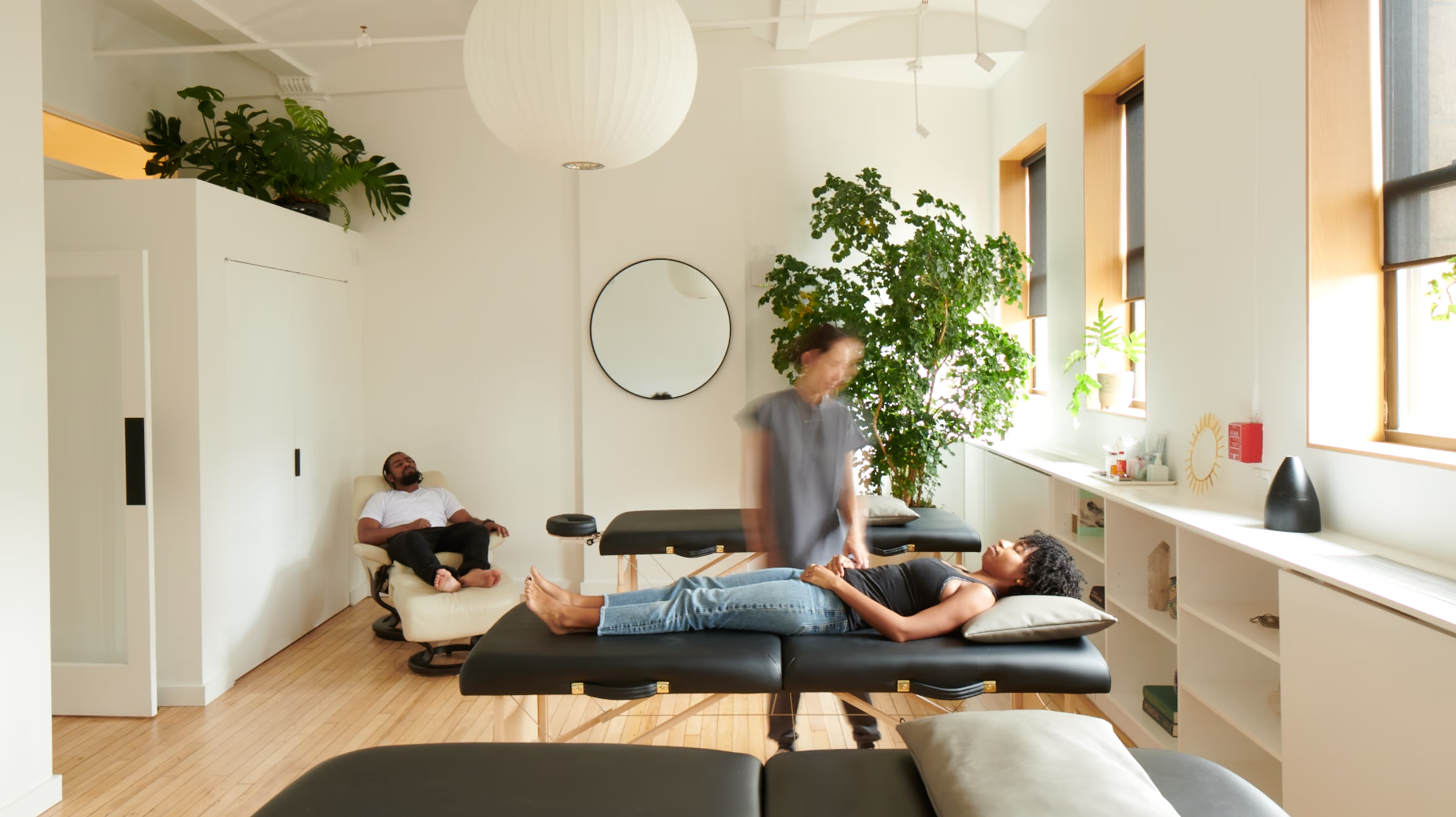
Our community room offers acupuncture in a shared, peaceful space — comfortable reclining chairs, soft lighting, and a calm atmosphere. It's accessible, effective care in a setting that feels welcoming rather than clinical.

For patients who prefer a fully private setting — or whose treatment requires it — we offer individual treatment rooms. The same high standard of care, in a one-on-one environment.

We're glad you're coming in. If anything comes up before your appointment, our front desk is here to help.

