
Menu

Whether it's osteoarthritis, a lingering sports injury, or chronic inflammation with no obvious origin, knee pain tends to respond well to acupuncture for many people. Research suggests it may reduce pain and improve physical function by calming inflammation and settling the nervous system signals that amplify pain over time. We treat knee pain regularly at our Chelsea clinic.
Most people who come in are already trying something — physical therapy, injections, or NSAIDs. Acupuncture fits well alongside those approaches, and depending on the situation can also be a standalone option. It's one of the many pain conditions we treat at Olo.
Both chronic and acute knee pain involve the nervous system amplifying and sustaining pain signals over time. Acupuncture stimulates sensory nerves in a way that may reduce how intensely those signals are felt. Many patients notice that not only does local pain ease, but their overall pain sensitivity shifts after a course of treatment.
Knee osteoarthritis involves persistent low-grade inflammation in the joint lining and surrounding tissue. But acute injuries like sprains or post-surgical swelling involve an inflammatory response that acupuncture may also help calm. Research suggests it prompts the body to release natural anti-inflammatory compounds — which can reduce swelling, ease stiffness, and support recovery.
The knee joint has relatively limited blood supply compared to muscle tissue, which is part of why it can be slow to heal. Acupuncture may improve local circulation — bringing more oxygen and nutrients to cartilage, tendons, and the joint capsule. For acute injuries, improved circulation can also accelerate tissue repair and reduce the stagnation that makes a swollen, painful knee feel stuck.

Knee osteoarthritis is one of the better-studied applications of acupuncture, and the evidence is encouraging. A 2024 meta-analysis published in BMJ Evidence-Based Medicine — covering 80 randomized trials and nearly 10,000 patients — found that acupuncture significantly reduced pain and improved physical function. It is considered a reasonable option alongside or instead of other conservative treatments like physical therapy or NSAIDs.
Runner's knee, patellar tendinopathy, IT band syndrome, post-sprain stiffness — these are common presentations at Olo. Acupuncture can help reduce inflammation, ease pain, and support the recovery process so you can get back to what you're doing. It works well alongside physical therapy and rehab, and many active patients find it shortens their recovery time.
If surgery is on your radar — whether it's a scope, a partial replacement, or a full knee replacement — acupuncture is a reasonable conservative option to try first or alongside your evaluation. Research suggests it can meaningfully reduce pain and improve function, and some patients find it delays or removes the need for surgery altogether. If surgery is on your radar, it's a reasonable approach to discuss with your orthopedist.
Lorem ipsum dolor sit amet, consectetur adipiscing elit. Suspendisse varius enim in eros elementum tristique. Duis cursus, mi quis viverra ornare, eros dolor interdum nulla, ut commodo diam libero vitae erat. Aenean faucibus nibh et justo cursus id rutrum lorem imperdiet. Nunc ut sem vitae risus tristique posuere.

If knee pain is slowing you down, we can help. Book a knee pain visit at Olo in Chelsea.
Acupuncture stimulates the body's natural pain-relief response — releasing endorphins, reducing inflammatory markers, and calming the nervous system signals that amplify pain. Whether the source is muscular, neurological, or inflammatory, this is a well-researched area of acupuncture and a foundation of how we treat at Olo.
Many conditions — from chronic pain to anxiety to hormonal imbalance — are rooted in a nervous system that's stuck in overdrive. Acupuncture activates the parasympathetic response, shifting the body out of fight-or-flight and into the rest-and-repair state where the body can rest and recover. Many patients notice a calming shift during treatment.
In Chinese medicine, the body is treated as an integrated system — not a collection of isolated symptoms. A tension headache, a disrupted sleep cycle, and a low-grade digestive issue may all reflect the same underlying pattern. Treating the root rather than just the symptom is why results from acupuncture often extend beyond symptom relief.
If you've never had acupuncture before, you're in good hands. We take time at your first visit to understand your full health picture, explain what to expect, and design a treatment plan around your specific needs. Most first-time patients are surprised by how comfortable — and how calming — the experience is.
Whether you're looking to reduce your reliance on medication, complement an existing treatment plan, or simply prefer a more natural approach, acupuncture offers a well-researched, well-tolerated path. It works through the body's own systems — not by overriding them.
Acupuncture isn't only for acute problems. Many patients at Olo come in regularly for maintenance — monthly sessions to manage stress, support energy, and keep the patterns that cause problems from building up. Think of it the way you'd think about exercise or sleep: a consistent practice that compounds over time.

Our team of licensed acupuncturists holds master's and doctoral degrees from accredited programs, with over 3,000 hours of training each. Nationally certified and licensed by the State of New York, they bring diverse specialties and approaches — so your care is always matched to your needs.

We offer a range of pricing options — from our full-price treatments to sliding scale rates — so that quality care is within reach. No insurance? No problem. We keep rates reasonable for cash-paying patients, and our full price list is always available online.

A number of health insurance plans in New York City cover acupuncture. We accept insurance appointments and are happy to help you understand your coverage. Not sure if you're covered? Learn more about insurance at Olo.

Olo has been a neighborhood fixture since 2011 — conveniently located between Chelsea and Flatiron, a short walk from Penn Station and multiple subway lines. Online scheduling is available 24/7, and our front desk team is here to make every visit as easy as possible.
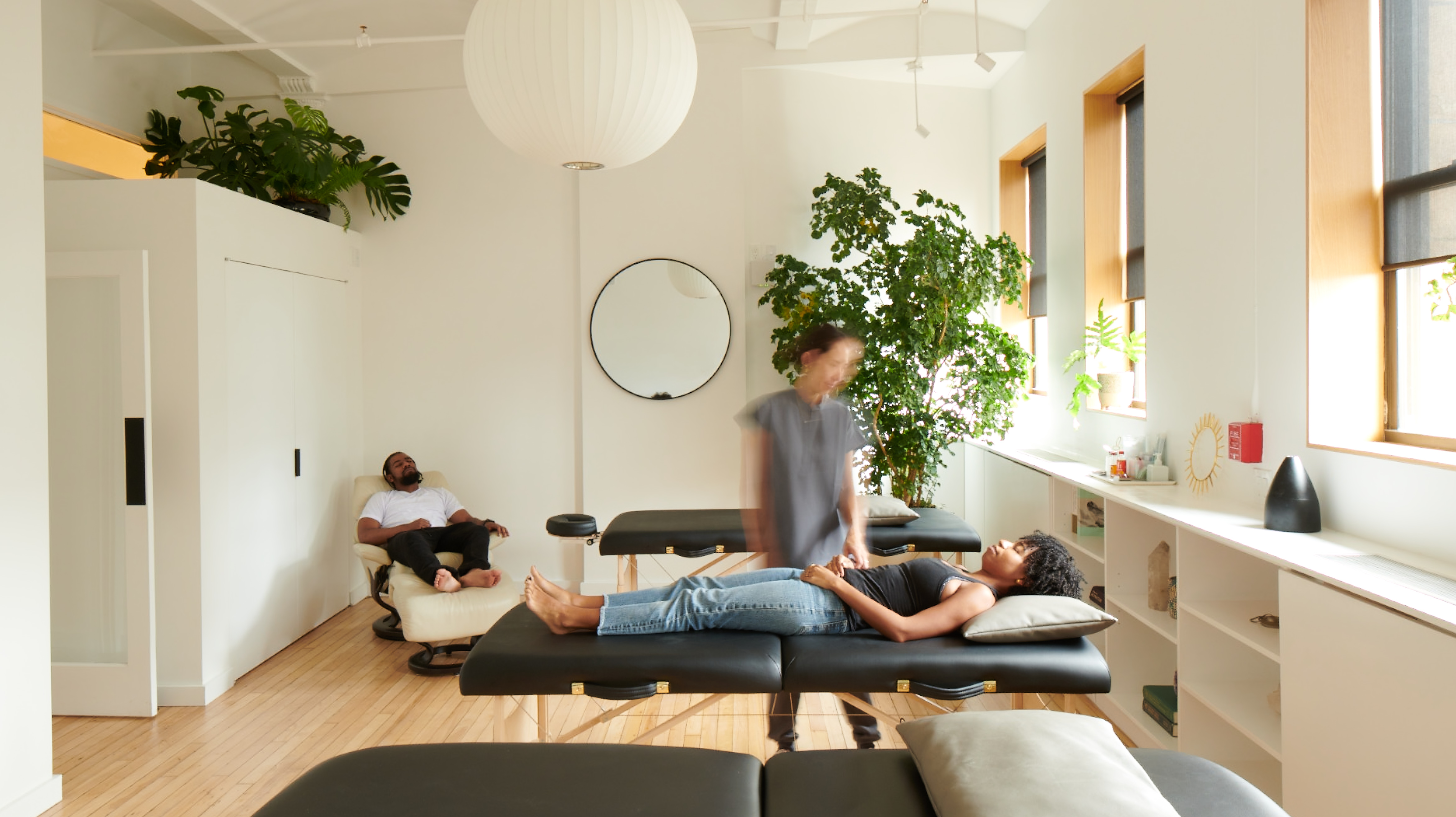
Our community room offers acupuncture in a shared, peaceful space — comfortable reclining chairs, soft lighting, and a calm atmosphere. It's accessible, effective care in a setting that feels welcoming rather than clinical.

For patients who prefer a fully private setting — or whose treatment requires it — we offer individual treatment rooms. The same high standard of care, in a one-on-one environment.
For some patients, acupuncture can be part of a conservative management strategy that delays or reduces the need for surgery — by meaningfully reducing pain and improving function over time. It is not a substitute for a surgical evaluation, and it won't reverse structural joint damage. If surgery is on your radar, it's a reasonable approach to discuss with your orthopedist.
Cortisone injections can provide fast, significant short-term relief — particularly useful during flare-ups or when inflammation is high. Acupuncture tends to work more gradually, but its effects can build over a course of treatment and may last longer. The two approaches can be used concurrently.
Acupuncture can be helpful for a range of knee conditions beyond osteoarthritis — including runner's knee, patellar tendinopathy, IT band syndrome, and post-surgical pain and swelling. It works by reducing local inflammation, improving circulation to the area, and calming the pain signals that tend to persist after injury. Many patients use it alongside physical therapy to support and accelerate their recovery.
Most patients notice some improvement within four to six sessions, though this varies depending on how long the condition has been present and how severe it is. Acute injuries often respond faster than long-standing osteoarthritis. We typically recommend a course of six to eight treatments before evaluating results — and many patients continue on a maintenance schedule after the initial course to hold their progress.
Yes — knee osteoarthritis is one of the better-studied applications of acupuncture. A 2024 meta-analysis published in BMJ Evidence-Based Medicine, covering 80 randomized trials and nearly 10,000 patients, found that acupuncture significantly reduced pain and improved physical function compared to both sham acupuncture and no treatment. Though more research is needed, it is considered a reasonable option alongside conservative treatments like physical therapy or NSAIDs.

We'll take time to understand your health history and what's brought you in — then build a plan around you.
Online booking is available 24/7

